BACKCASE·BODYBAR · 02/10
OMNI COMMON·2026·ADS BUILT FOR INVESTORS, NOT JUST FANS
Designing Ads That Sell Franchises
Client
BODYBAR Pilates
Engagement
2026
Role
Lead Designer
Deliverables
Ad Creative, Meta, PPC, LinkedIn
01 — Snapshot
BODYBAR Pilates needed people ready to invest in opening a studio, not just more gym sign-ups. I led the design strategy that turned ad spend into qualified investor leads. Five months of campaigns, 567 leads, and (more importantly) a clear map of what actually converts.
02 — Challenge
BODYBAR sells Pilates franchises. The real goal isn't memberships; it's finding qualified people who want to own a studio. Previous agencies missed this. Their campaigns pulled clicks and impressions, but the leads never matched what BODYBAR was actually selling: a serious investment opportunity.
We needed creative that spoke to investors, not fitness fans. That meant understanding who those investors actually were before touching a single ad.
03 — Research & Personas
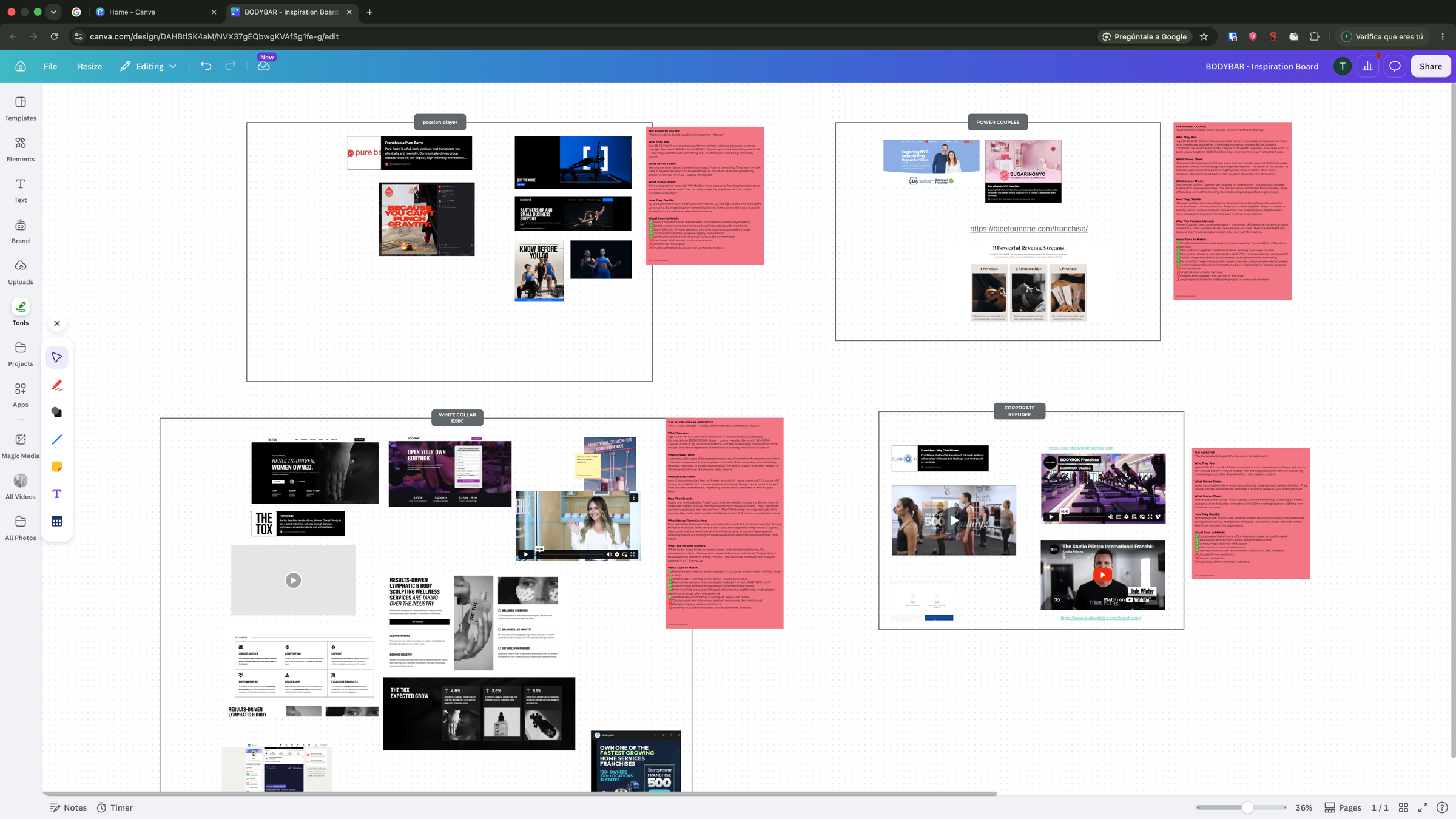
BODYBAR came to us with internal insights on their existing investor base, the profiles, traits, and patterns of the people who had signed and scaled. That knowledge framed the research from day one and kept us focused on the audiences that actually convert.
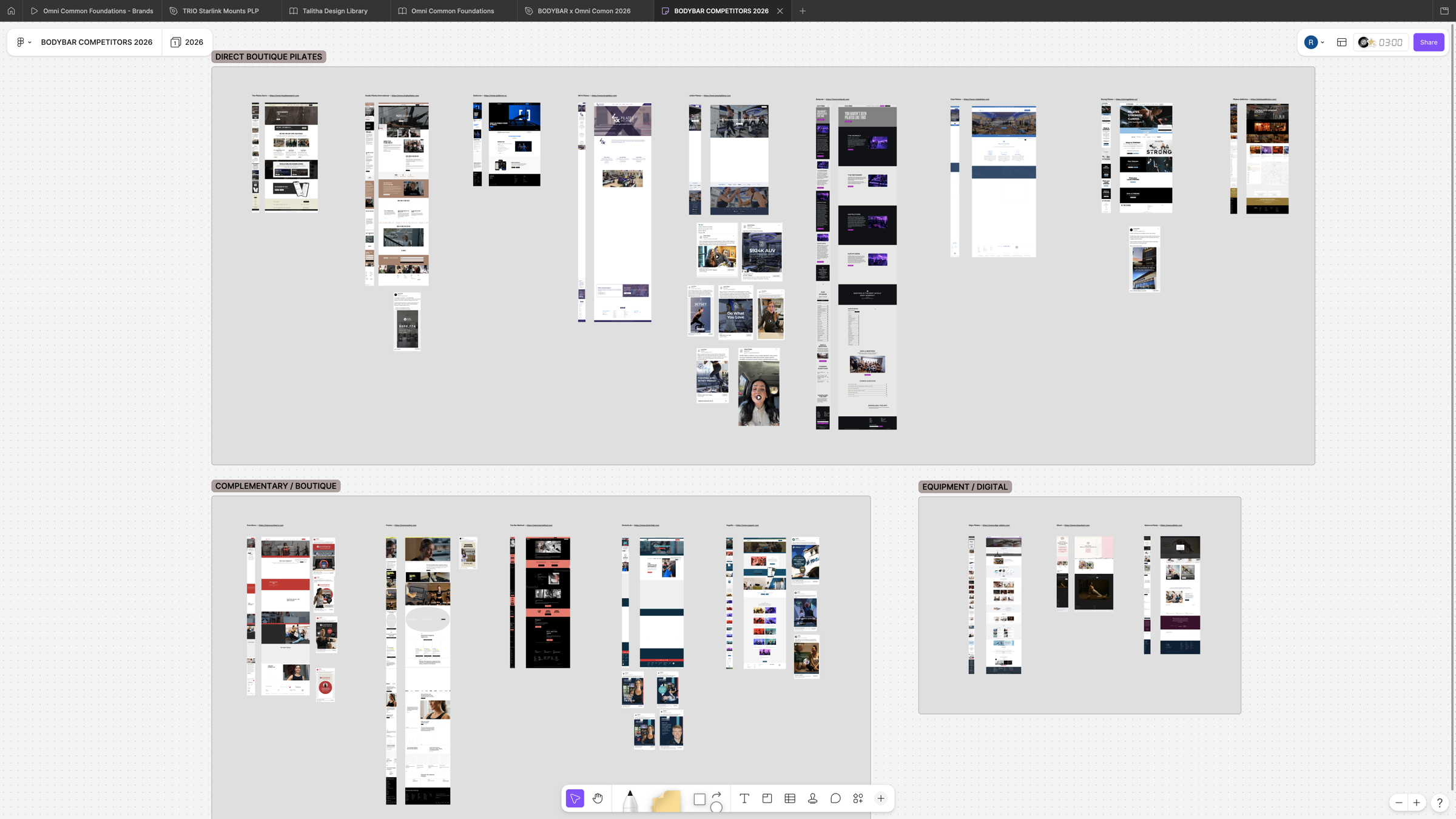
From there, we built a competitor benchmark in Figma, breaking down how other fitness and franchise brands ran their ads: messaging, visuals, offers, and tone. That gave us a clear map of the category and showed where BODYBAR could stand out instead of blend in.
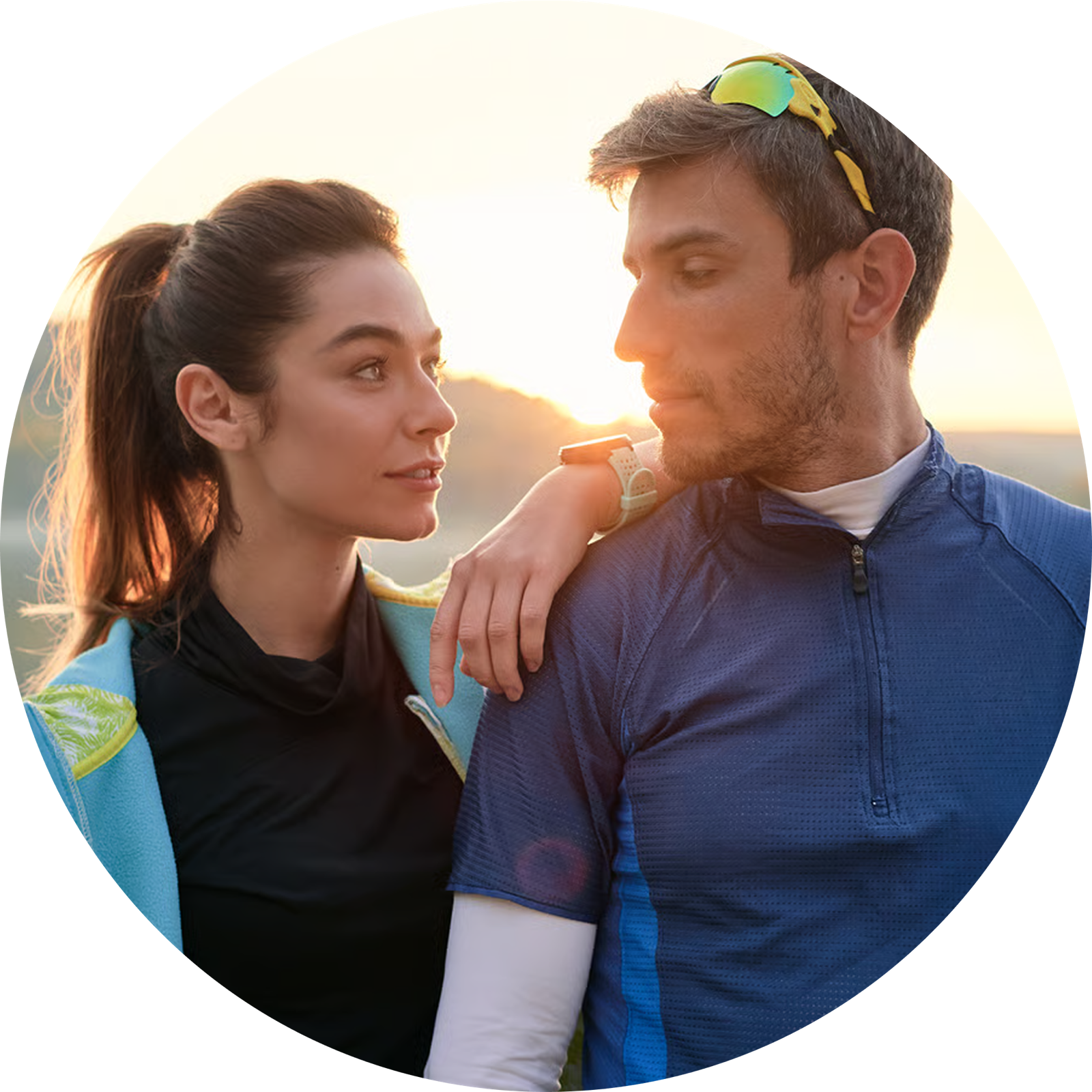
Research pointed to three audiences worth designing for. Three profiles, three angles, three creative directions.
04 — Design & Production
This wasn't a one-off campaign. The team needed a system that could keep producing without slowing down. So we built one.
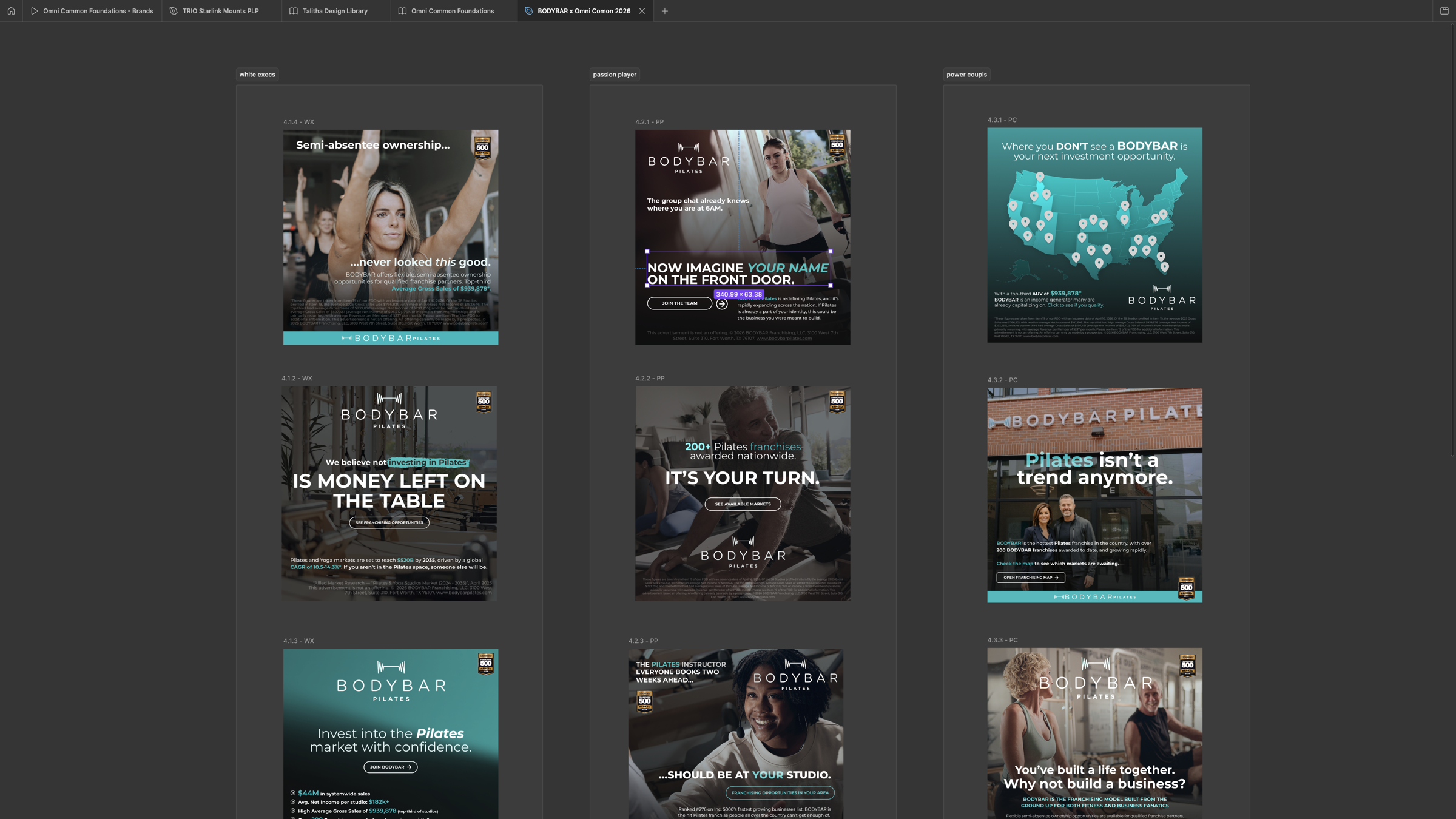
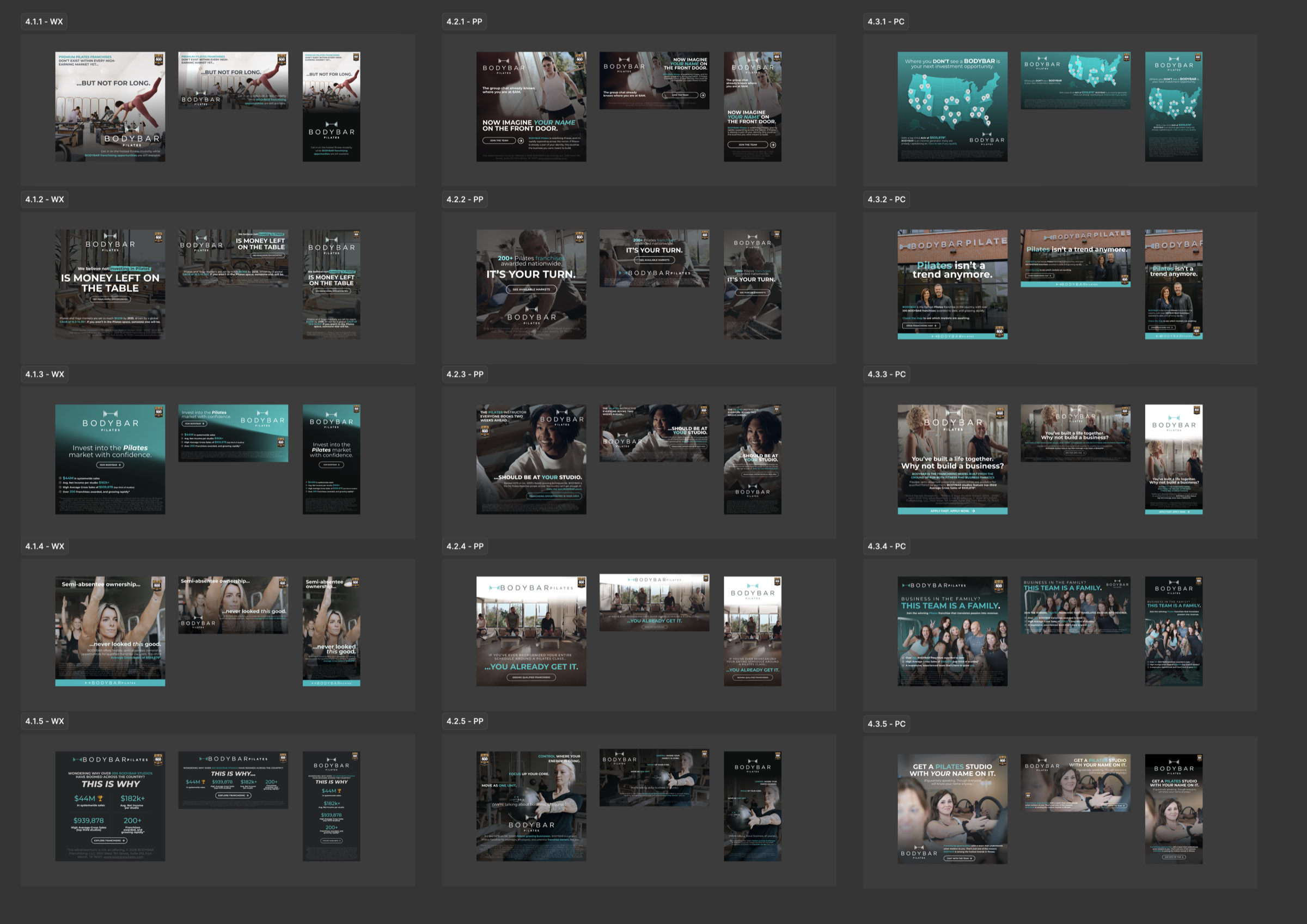
Strategy started where the research left off. Three personas, three angles per drop. Every monthly batch ships as three sets, one per persona, each built around its own message and audience.
To keep it all straight as volume grew, we set a naming foundation early: batch, persona, ad. So 4.2.1 reads as batch 4, persona 2, ad 1. No guesswork when a file lands in Slack or a feedback round, no mismatched assets in production.
Every angle starts as a master concept in one Figma file: hero image, headline, sub-headline, copy, legal line, brand mark, CTA. From there it's adaptation, not redrawing.
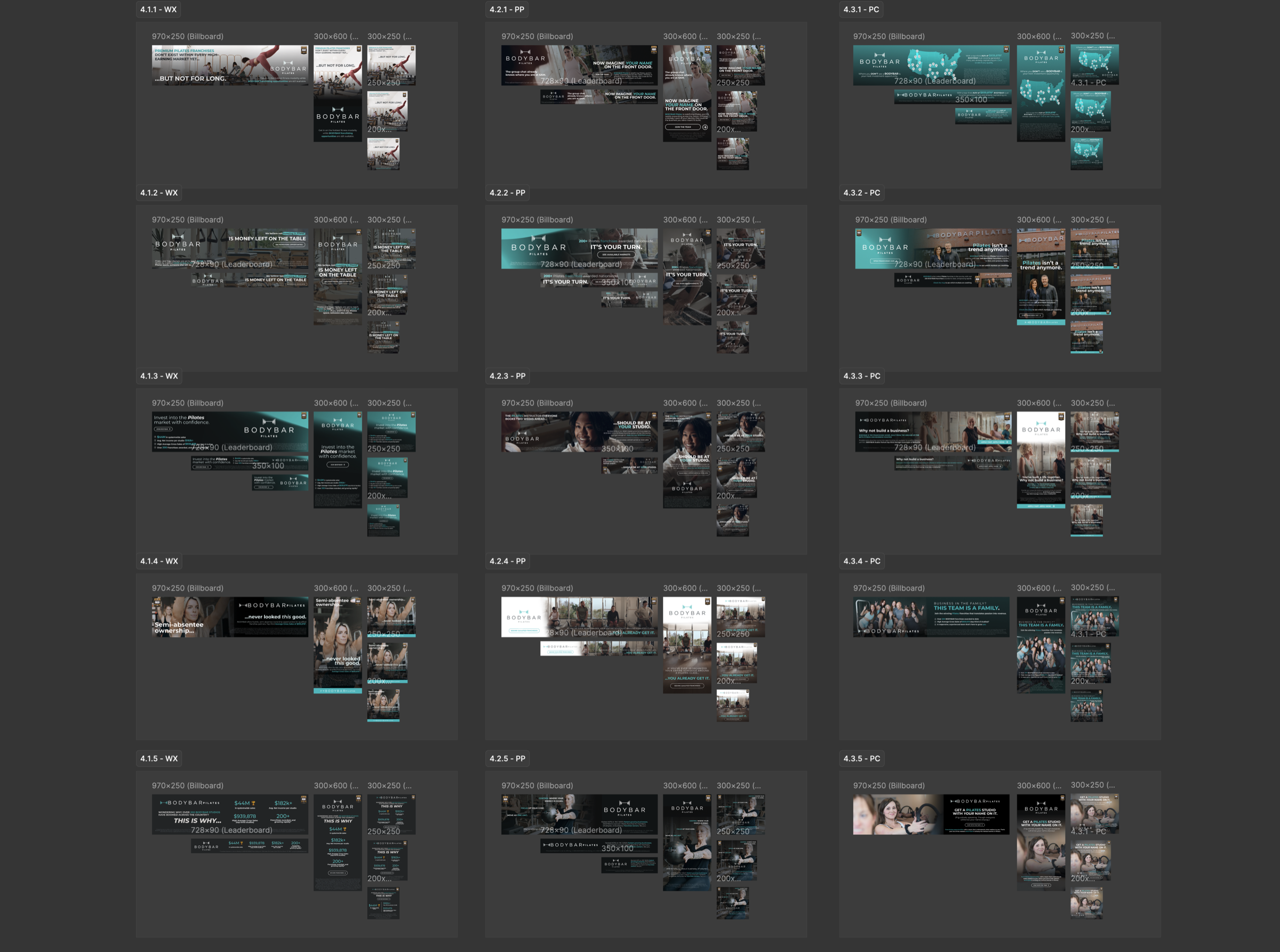
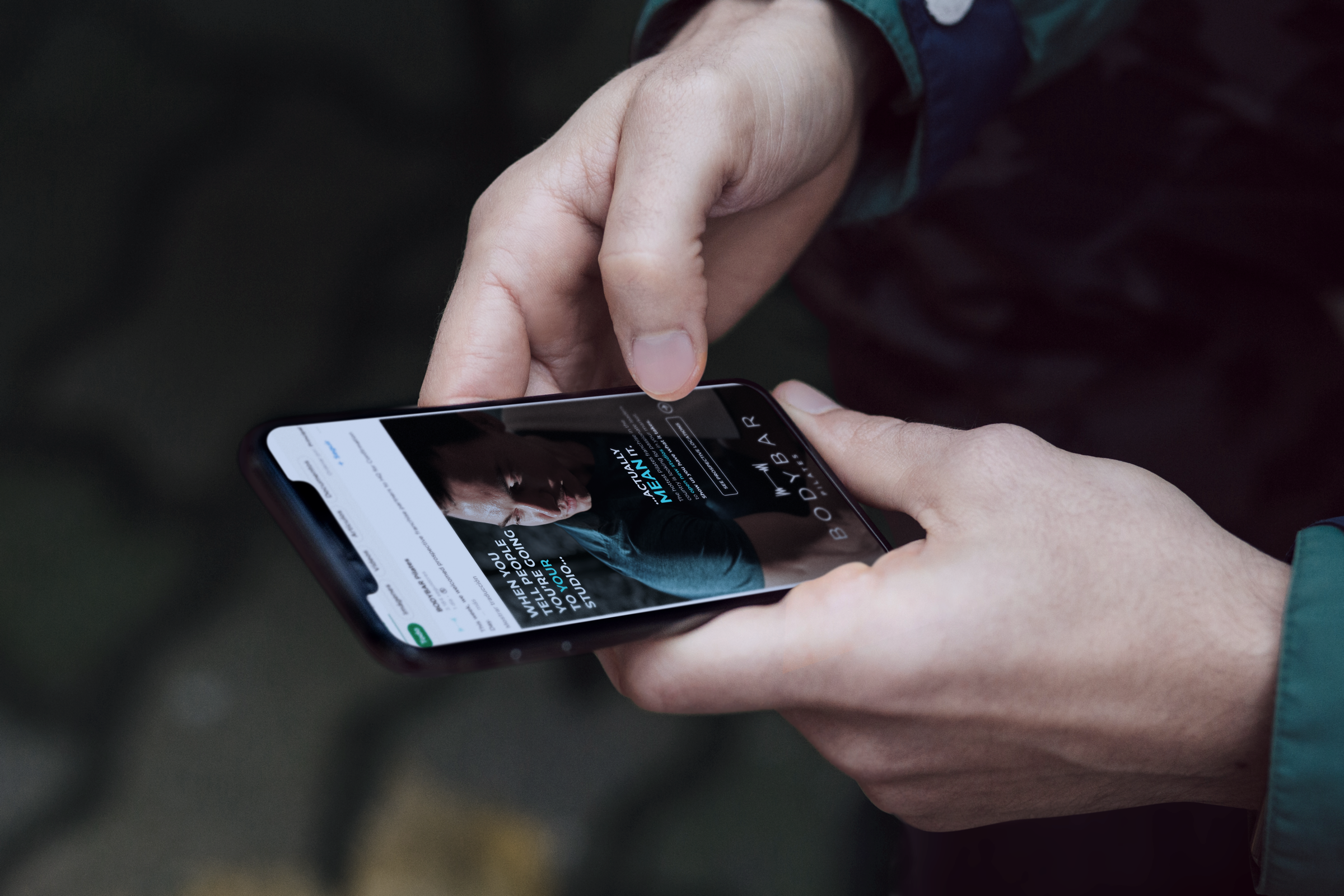
Each master has to live across PPC (Google), Meta, and LinkedIn. Different ratios, safe zones, character limits, legal disclosures. What reads at 1080×1080 breaks at a 728×90 leaderboard. We tune each one so the headline still earns the first scroll-stop.
Every master is a system of nested components. Headline, sub-headline, copy, legal line, CTA, brand mark, photo slot, all instances of base components. Channel frames reuse those same instances with auto-layout and constraints.
Change the master once, every variant updates. Swap a hero photo, rewrite a CTA, ship dozens of placements without touching individual files. When legal asks for a one-word change on the franchise disclosure, it lands across every format in seconds.
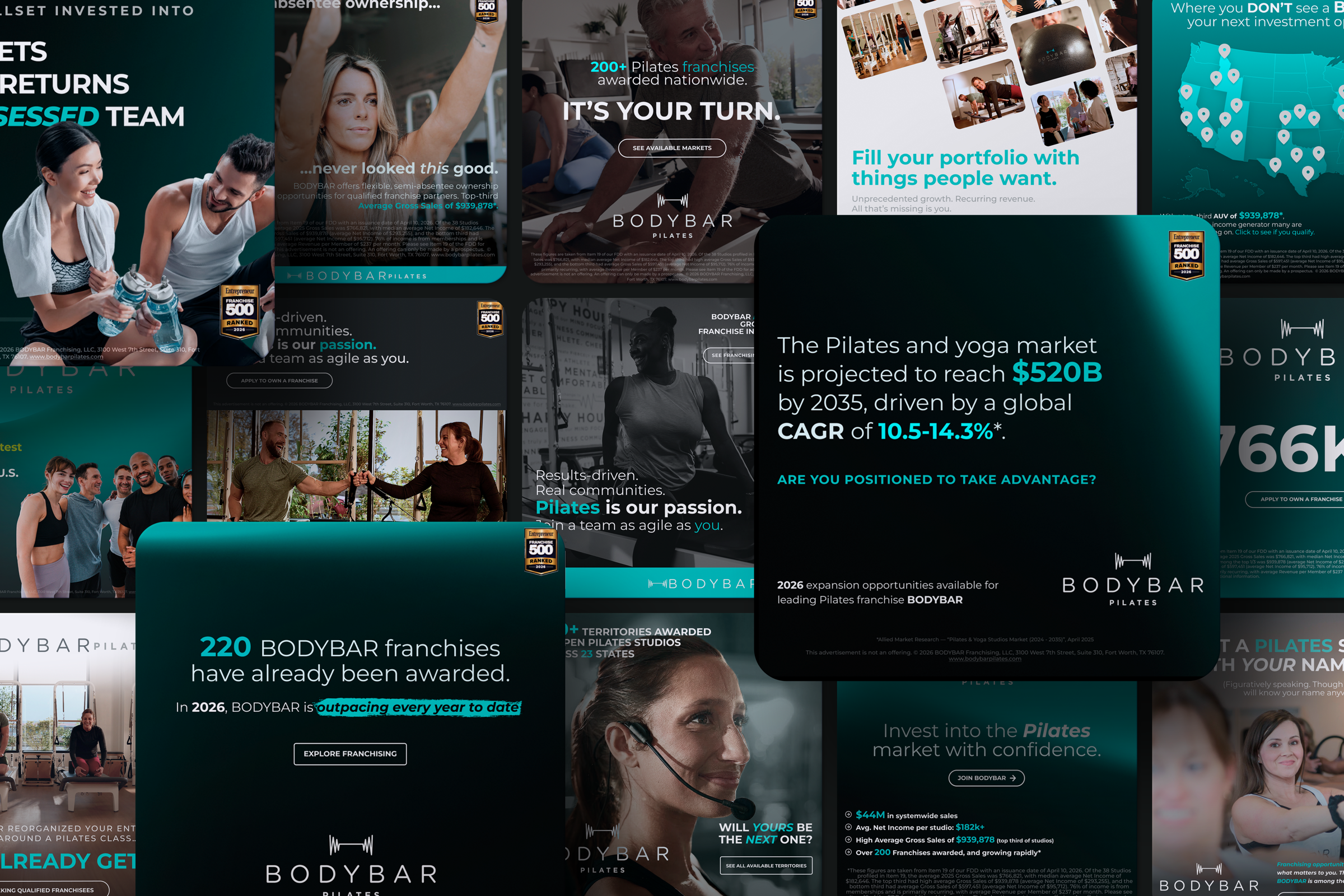
This is what makes the cadence work: a new set of 20 ads per month since April, with full ratio adaptations across PPC, Meta, and LinkedIn. Same system, new angle every month.
AI sped up the slow parts on both ends. Research: faster competitor scanning, audience synthesis, persona framing. Production: supporting graphic assets, alternate hero treatments, and (most usefully) automated export of every component variant at the right size, ratio, and weight per channel. No one clicking through Figma's export panel one ad at a time.
More time on creative judgment. Less on the repetitive work.
05 — Results
567 leads across five months. But the more valuable outcome was clarity on what actually works: which angles convert, which channels qualify, and where to put the budget next.
“For the first time, BODYBAR's ad spend was tied directly to the goal that matters: selling more franchises.”
Five months of campaigns gave us more than leads. They gave us a clear map of what converts and what doesn't. That's the kind of output that actually changes how a brand spends its next dollar.
The Power Couples insight alone was worth the entire engagement. Good creative strategy pays for itself.
Thank you for reading!
outro
Do I have your attention?